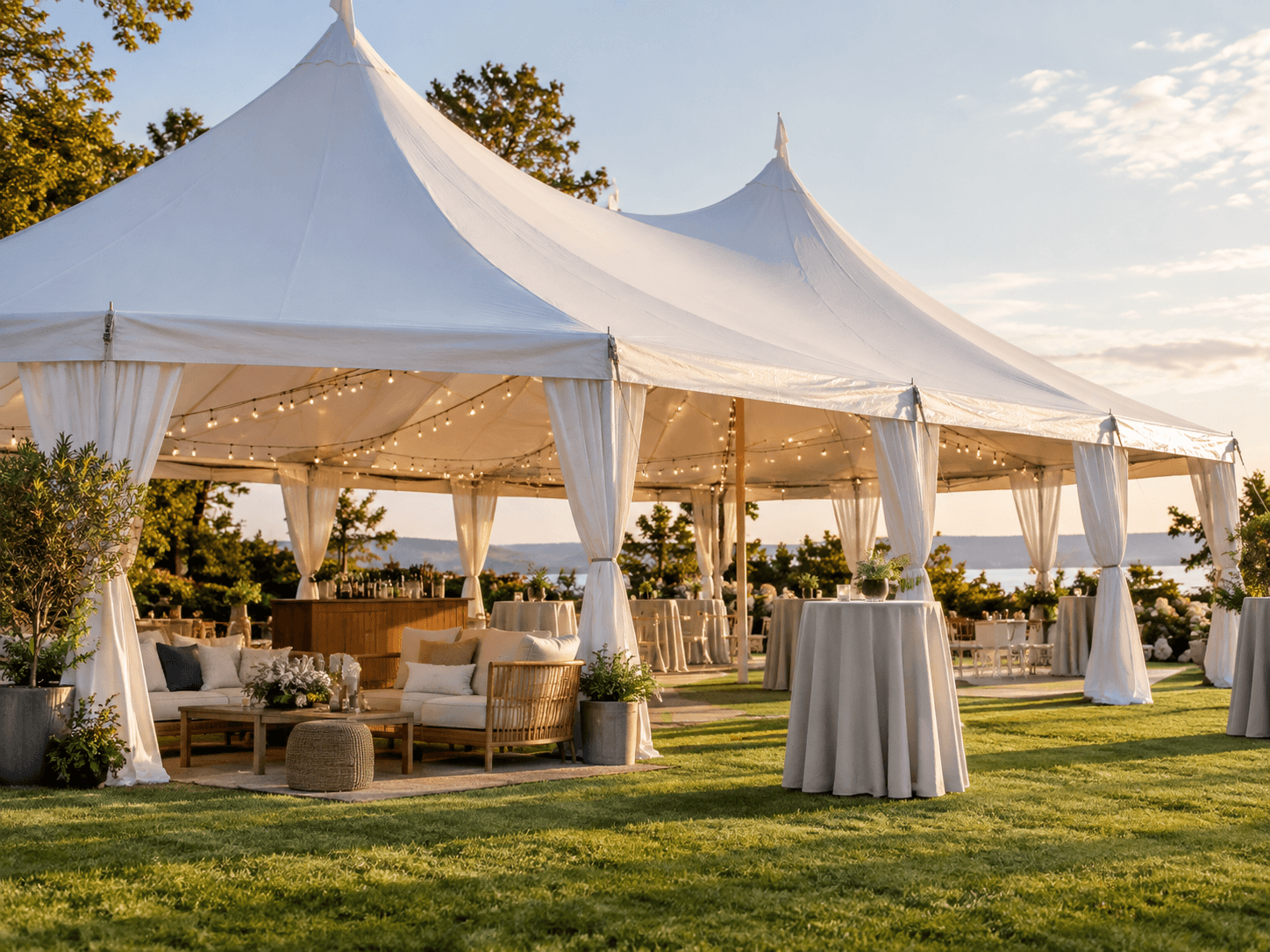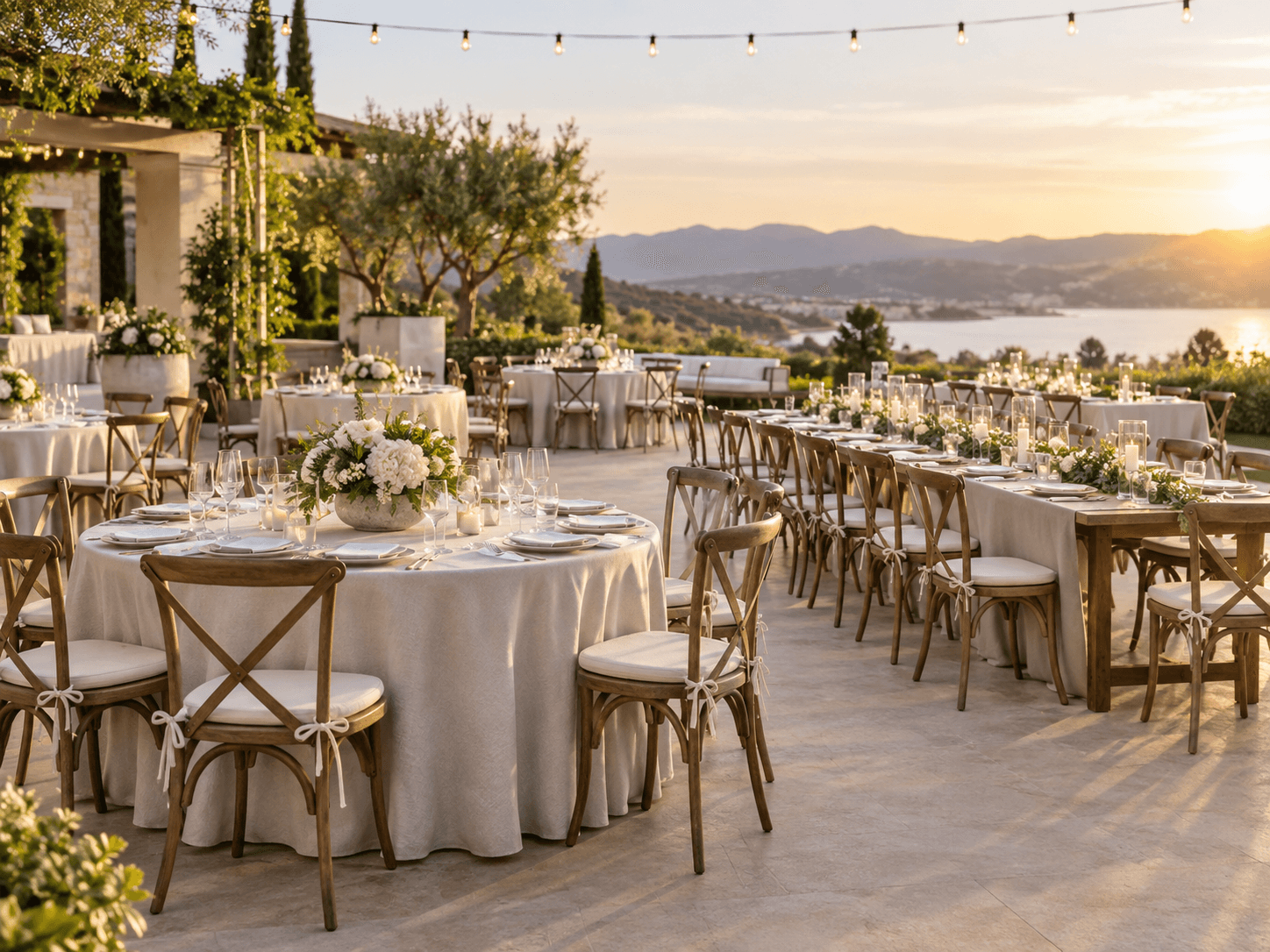
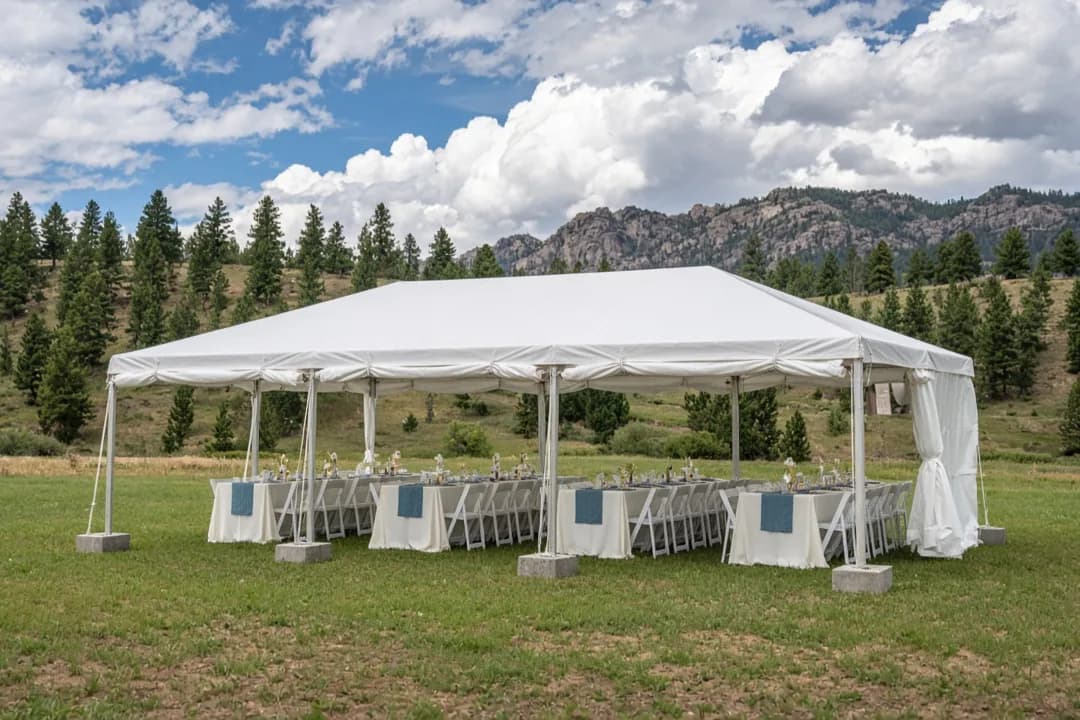
A tent is only as good as the plan around it. On Colorado's Front Range, that plan has to account for afternoon thunderstorms, hail, sudden gusts, strong high-elevation sun, cold evenings and a permit threshold that changes from one town to the next.
This guide covers the weather and site questions to work through with a tent rental provider, how lightning safety should shape the event schedule, and how tent permits work in the Pikes Peak region. Rules, equipment and pricing vary by provider, venue and jurisdiction, so treat it as a planning checklist and confirm the details locally before you book.
Why Colorado Changes the Tent Plan
The National Weather Service office in Pueblo describes Colorado's climate as one of large seasonal swings and large day-to-night temperature changes, with hot summer days on the plains often relieved by afternoon thundershowers. Its lightning data shows June, July and August have the most cloud-to-ground lightning across the state, peaking in July and August as the North American Monsoon brings daily thunderstorm activity, mainly over the mountains.
For a tent, that adds up to five planning questions: how you'll handle lightning, what happens if hail falls, how the tent is anchored against gusts, how the crowd stays comfortable at elevation, and which permits apply where you're setting up.
- Peak lightning months (NWS Pueblo)
- June to August, peaking July and August
- Severe thunderstorm (NWS)
- Gusts of 58 mph or more, or hail 1 inch or larger
- After the last thunder (NWS)
- Wait 30 minutes before going back outside
- Model fire code (2021 IFC)
- Permit for tents over 400 sq ft, with exceptions
- Colorado Springs tent permit
- Required over 2,400 sq ft
Lightning: A Tent Is Not a Safe Place
The National Weather Service is blunt about this: there is no safe place outside when thunderstorms are in the area. A tent offers no protection from lightning, and the same goes for rain shelters, open-sided picnic shelters, small sheds and open vehicles. The safe options are substantial buildings and hard-topped vehicles.
You may know the older 30-30 rule: take cover when the gap between flash and thunder drops to 30 seconds, then wait 30 minutes after the last thunder. Current NWS guidance is simpler and stricter on the first half. You can normally hear thunder about 10 miles from a strike, and lightning can strike outward 10 miles from a storm, so if you can hear thunder at all, you're likely within striking distance. The NWS slogan is "When Thunder Roars, Go Indoors!" The 30-minute wait after the last lightning or thunder still applies.
Build a Lightning Plan Into the Schedule
- Name the safe place before the event: the nearest substantial building, or guests' hard-topped vehicles if no building is close. Make sure it can actually hold your guest count.
- Assign one person to watch the forecast and radar and give that person the authority to pause the event. The NWS advises cancelling or postponing early when thunderstorms are expected.
- During monsoon season, consider holding outdoor-only moments such as an open-air ceremony or toasts earlier in the day, and build a buffer into the timeline.
- Tell your caterer, DJ and AV crew the plan so they know when to stop and where to go.
- Restart only 30 minutes after the last thunder. If you hear another rumble, the 30 minutes start over.
A tent keeps guests dry. It doesn't protect them from lightning. When thunder roars, move people into a substantial building or hard-topped vehicles and wait 30 minutes after the last thunder.
Hail: Plan for It Instead of Hoping
NOAA's National Severe Storms Laboratory notes that Nebraska, Colorado and Wyoming usually have the most hailstorms in the country, and the area where the three states meet, known as "hail alley," averages seven to nine hail days a year. The NWS counts hail 1 inch across (about the size of a quarter) as severe, and NSSL estimates stones of 1 to 1.75 inches fall at roughly 25 to 40 mph.
Hail doesn't keep to a convenient schedule, either. NWS Pueblo's records include a rare overnight storm on June 13, 2018, that dropped golf ball to baseball-sized hail across southern Colorado Springs and into Fountain between about 12:30 and 2 a.m., a reminder that a tent left standing overnight is exposed too.
What to Work Out Ahead of Time
- Where guests go if hail starts. Hail falls from thunderstorms, so the lightning plan above is also your hail plan.
- Who is responsible for weather damage to the tent and rented items, and whether the provider offers a damage waiver. Terms vary by provider, so read the agreement.
- How rented AV, lighting and linens get covered or moved quickly, and who does it.
- How the tent sheds water and ice, especially in the valleys where two tents are joined together.
- Whether a tent that stays up overnight for a multi-day event is checked after a storm before guests return.
Wind: Anchoring, Sidewalls and When to Clear the Tent
Most damaging thunderstorm winds come from outflow, the burst of air a storm's downdraft pushes out along the ground. NSSL classifies damaging winds as those above 50 to 60 mph and notes they can reach 100 mph, and the NWS threshold for a severe thunderstorm is a 58 mph gust. The City of Manitou Springs puts it plainly in its event guide: tents and canopies must be secured to withstand high winds and sudden microbursts.
The 2021 International Fire Code also requires tents and membrane structures to be designed and installed to withstand the elements of weather and prevent collapse, with documentation of structural stability provided to the fire code official. In practice, that means anchoring is a conversation to have with your provider before you pick a site, not on the morning of the event.
Stakes or Weights? The Site Often Decides
Stakes need grass or soil, while pavement, patios and many parks call for weights, water barrels or ballast. Several cities in the region limit staking at events: Fountain park rules call for sandbags or cinder blocks instead of stakes, Monument doesn't allow staking at Town-permitted events because of sprinkler lines, and Manitou Springs requires weights unless Parks approves stakes in writing. If stakes are allowed, Colorado 811 says you must contact it at least three business days before you dig, and it doesn't mark private lines such as sprinklers, so ask how your provider handles utility locates.
Questions to Ask About Wind
- What anchoring will this tent use on this surface, and how much ballast does it need?
- At what conditions does your crew recommend dropping sidewalls or clearing the tent?
- How do sidewalls change the wind plan for this tent?
- Who is on call during the event if something loosens or shifts?
- Where will lighting, speakers and décor hang, and are they rated to be attached to the frame?
Altitude: Strong Sun, Cold Nights and Equipment
Elevation changes how a tent feels to guests. The World Health Organization notes that UV levels rise about 10 percent with every 1,000 meters of altitude, and the Colorado Climate Center's description of the state's climate, shared by NWS Pueblo, points to intense high-elevation sunlight, quick nighttime temperature drops and freezing temperatures possible every month in some mountain locations.
NOAA's 1991-2020 normals for the Colorado Springs airport put the July average high at 86.5°F and the low at 58.2°F, a spread of almost 30 degrees. Pueblo runs hotter, with a July normal high of 93.4°F. Up at about 8,465 feet in Woodland Park, evenings can cool quickly even in summer.
- Plan shade for the afternoon and warmth for the evening: a tent top for sun, then sidewalls and heaters as the temperature drops. Ask the provider which heaters are approved for use in or near a tent and what clearances they need.
- Size the generator for elevation. Honda's generator manuals, for example, say engine power drops about 3.5 percent for every 1,000 feet of altitude even with a high-altitude carburetor adjustment. Give the provider your full load for lighting, sound and catering.
- Put water, sunscreen and shade near any outdoor ceremony seating, not just under the main tent.
- Light the path to parking and restrooms, since guests will walk it after dark.
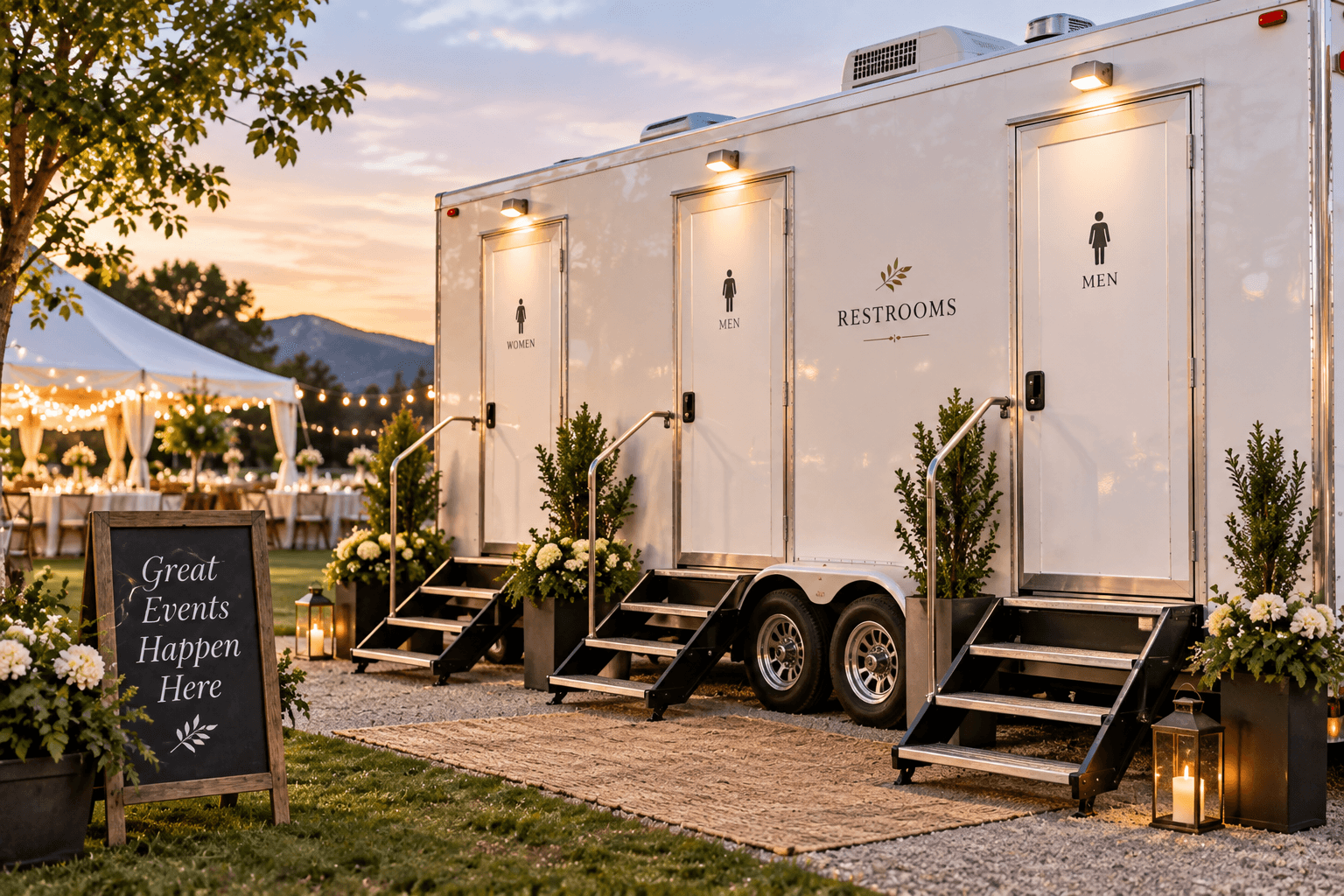
See AV & Lighting Rentals for lighting and power options, and Restroom Trailer Rentals if the site has no permanent restrooms.
Tent Permits: The Threshold Depends on Where You Are
The 2021 International Fire Code, the model code many Colorado jurisdictions adopt, requires a permit from the fire code official for tents and membrane structures over 400 square feet. It exempts tents used only for recreational camping and open-sided tents that meet all of these conditions: no single tent over 700 square feet, no more than 700 square feet combined for tents placed side by side without a 12-foot fire break, and at least 12 feet of clearance to structures and other tents.
Cities and fire districts adopt the code with their own amendments, so the number that applies to your event depends on the address. Here's what the official sources say for the Pikes Peak region:
- Colorado Springs: The Fire Marshal's office requires a revocable permit before tents, canopies or temporary membrane structures over 2,400 square feet go up. The 2,400 square feet applies to a single structure or the combined area of structures attached to each other.
- Monument: The Town's special event application includes a fire code section, tied to the Tri-Lakes Monument Fire Protection District, that asks if you'll put up a temporary tent over 400 square feet. Each tent needs a fire extinguisher.
- Manitou Springs: The City's Special Event Use Guide requires Fire Department approval for tents over 2,400 square feet, and tent locations and sizes go on the event site map.
- Woodland Park: The City's Temporary Use Permit application tells organizers to contact the Northeast Teller County Fire Protection District for any tent or canopy over 1,000 square feet, and asks about open flame or cooking under tents.
- Fountain: The City doesn't provide tents for events, and park rules don't allow staking. Ask the City about fire review when you apply for an event permit.
- Pueblo: The Pueblo Fire Department issues tent and membrane structure permits. Its application asks for dimensions, square footage and a tent diagram, and references the 2015 International Fire Code. Tents in city parks also need the Parks Director's written permission.
Fire code tent permits are tied to the structure, so a large tent on private property may still need one. Outside city limits, a fire protection district may be the fire code official. Confirm with the jurisdiction that covers the address, and ask your provider whether they pull the permit or you do.
Put It All on the Site Plan
Most permit applications in the region ask for a site map. Manitou Springs wants tent locations and sizes on the event map, Woodland Park asks you to describe each temporary structure's size, materials, anchoring and lighting, and Pueblo's tent application includes a diagram. Even without a permit, a simple drawing helps your provider, caterer and venue agree on the layout. Include:
- Each tent's size and position, plus the distance to buildings and other tents
- The anchoring method and any no-stake zones, such as sprinkler or utility lines
- Exits, aisles and the route to the lightning-safe building or parking
- Generator and fuel locations, kept away from guest areas
- Cooking, heaters and any open flame
- Restrooms, handwashing and trash
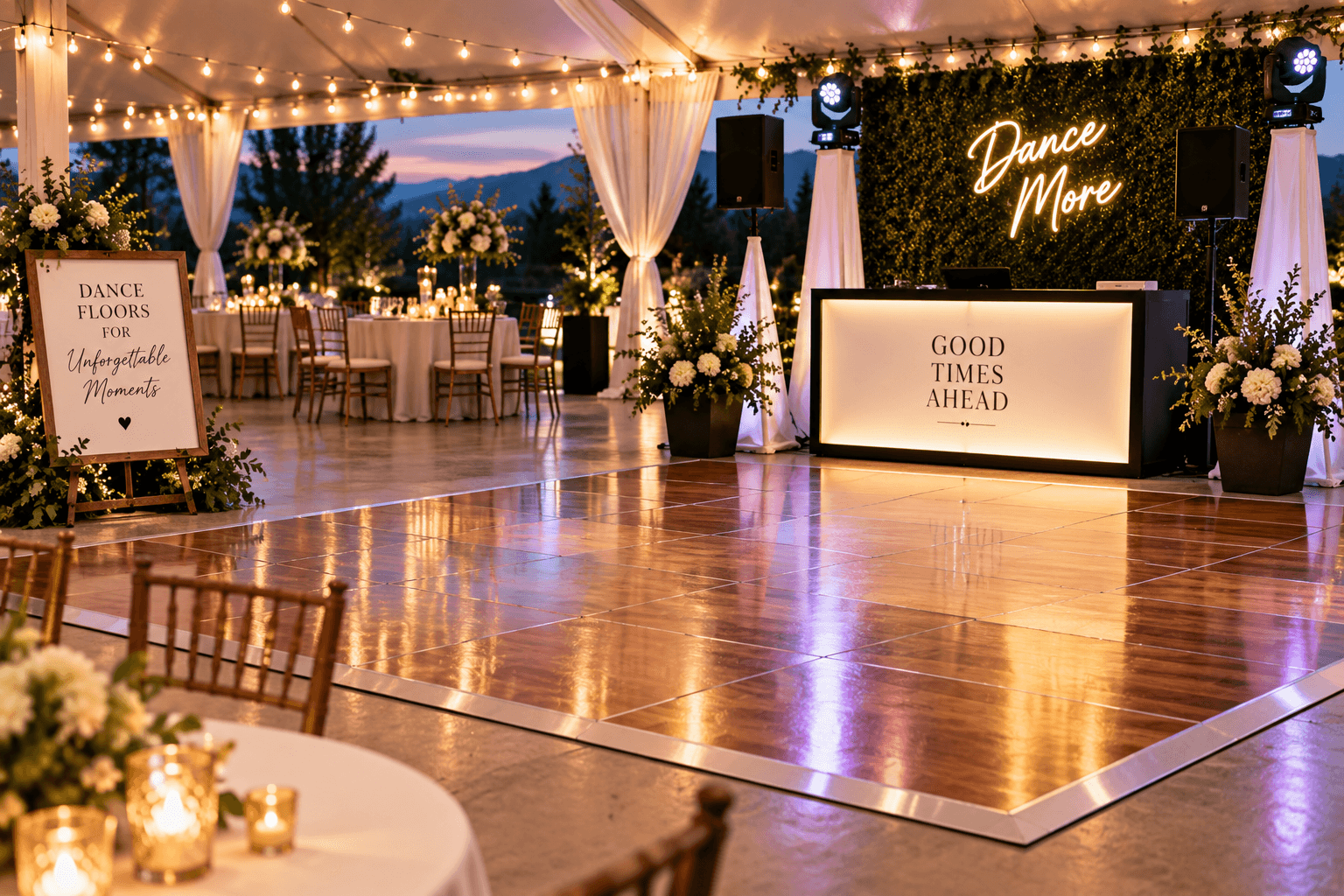
- The dance floor, stage, bar and buffet, so the tent size matches the layout
Not sure how much space the layout needs? Our guide on what size tent you need walks through seating styles, dance floors and catering space, and how much a tent rental costs explains what drives a quote.
Questions to Ask Your Tent Rental Provider
Bring these to every quote so you can compare providers on the same terms:
- Which tent type fits this site and surface, and how will it be anchored?
- What's your weather policy, and who decides when to clear the tent or reschedule?
- Who is responsible for weather damage, and is a damage waiver available?
- Do you handle the tent permit and fire inspection, or do I?
- Do you arrange utility locates before staking?
- What sidewalls, heaters, fans and lighting do you offer for this tent?
- What size generator does the load need at this elevation?
- When do setup and teardown happen, and does the tent stay up overnight?
- Can you also supply tables, chairs, a dance floor or flooring?
- What's included in the quote, and what's billed separately?
Tents rarely come alone. Compare Table & Chair Rentals and Dance Floor Rentals alongside your tent rental quotes, and if it's a wedding, our Colorado wedding rental checklist covers what to book, when to confirm and what to ask. Wedding Rentals lists the rest of the reception setup.
Planning a Tent in the Pikes Peak Region
Each city page covers local permits, park rules and event logistics in more detail: Colorado Springs for the regional hub and its park permits, Monument for the Tri-Lakes area, Manitou Springs for foothills weddings, Woodland Park for mountain events at altitude, Fountain for park and community events, and Pueblo for lower, hotter events along the Arkansas River.