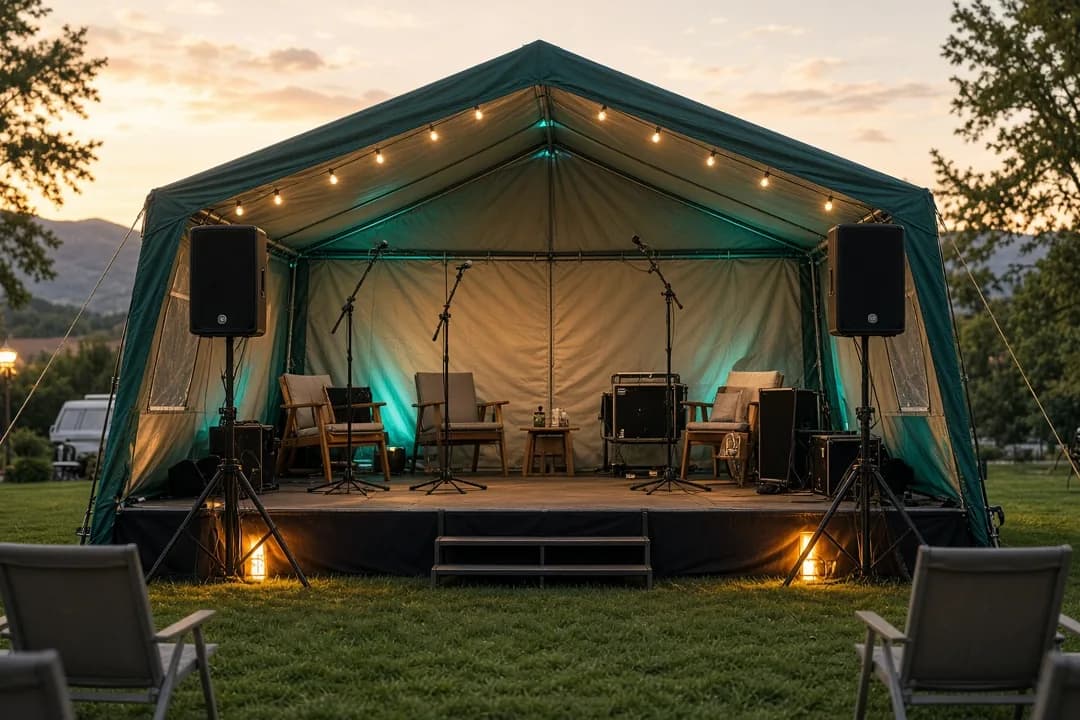
A stage, a PA and a string of lights can turn a picnic into a permitted event. Colorado cities treat stages, amplified sound and temporary structures as special event triggers, and the state's adopted fire code adds a size threshold many planners miss.
This guide covers when a stage needs a permit, how Colorado's noise statute and local rules interact, power and generator placement, site plans, weather monitoring and the questions that keep a rental company and a fire marshal on the same page. Inventory, delivery areas and pricing vary by provider, so confirm the specifics with the company you rent from.
What Most Events Actually Need
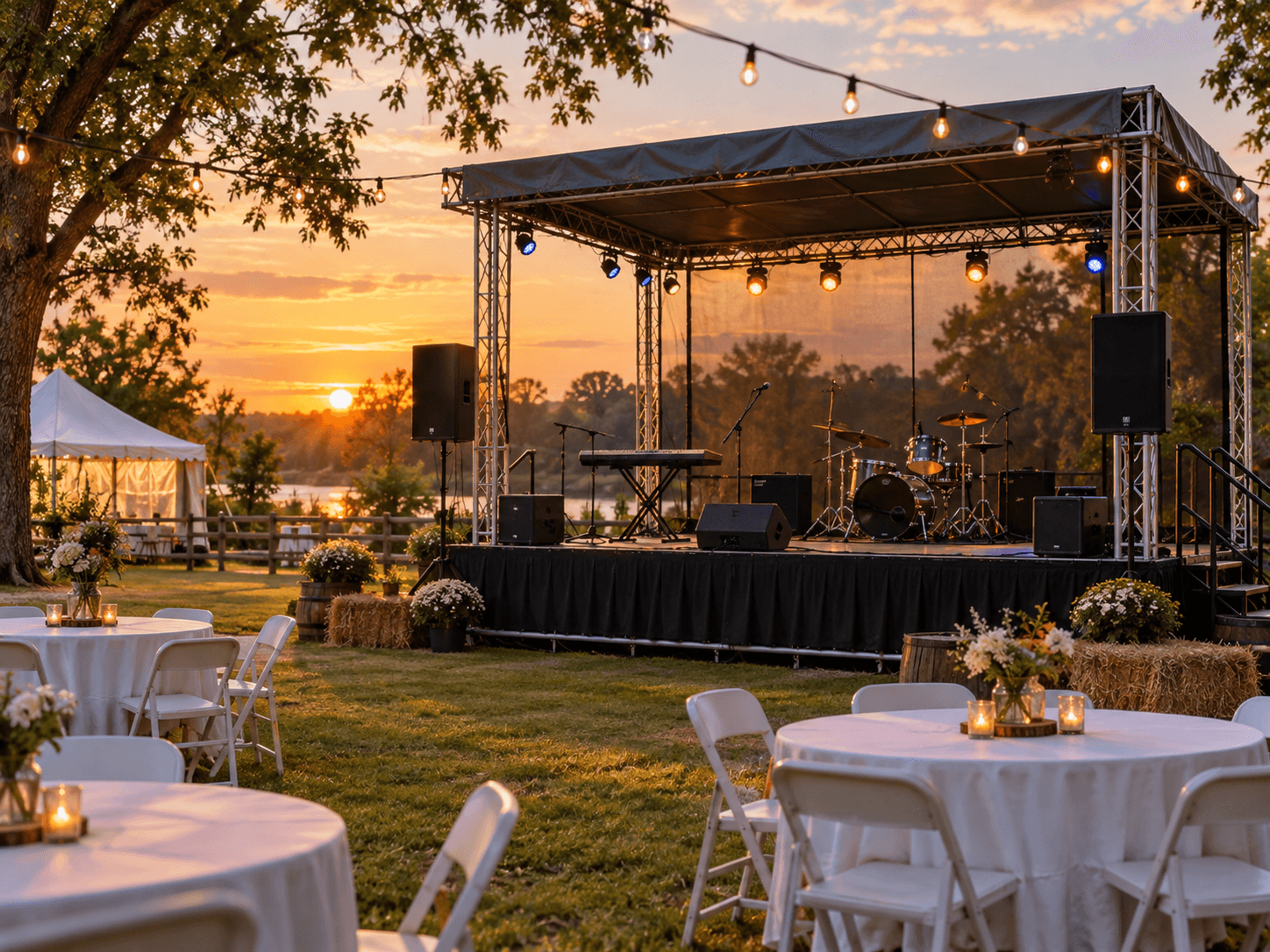
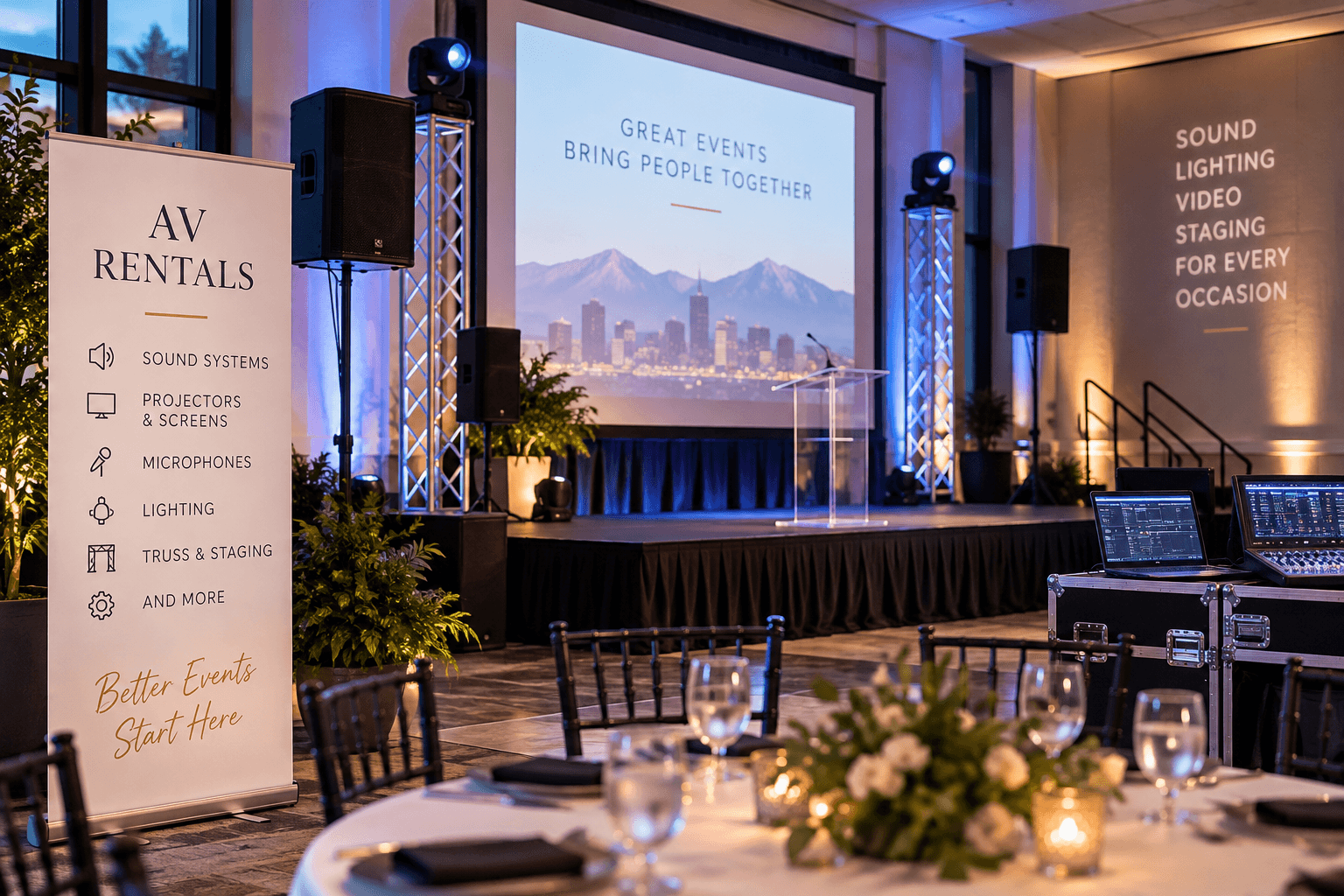
Not every event needs a full stage package. A backyard reception may need only a small riser, uplighting and a DJ's speakers. A public festival may need a roofed stage, delay speakers, house lighting and a generator farm. Start with the program: How many people need to see the speakers? How late does the music run? Is the site on public property, private land or a park with its own noise and structure rules?
- Stage or riser sized for the performers and the sight lines
- Sound system matched to the guest count and the neighbors
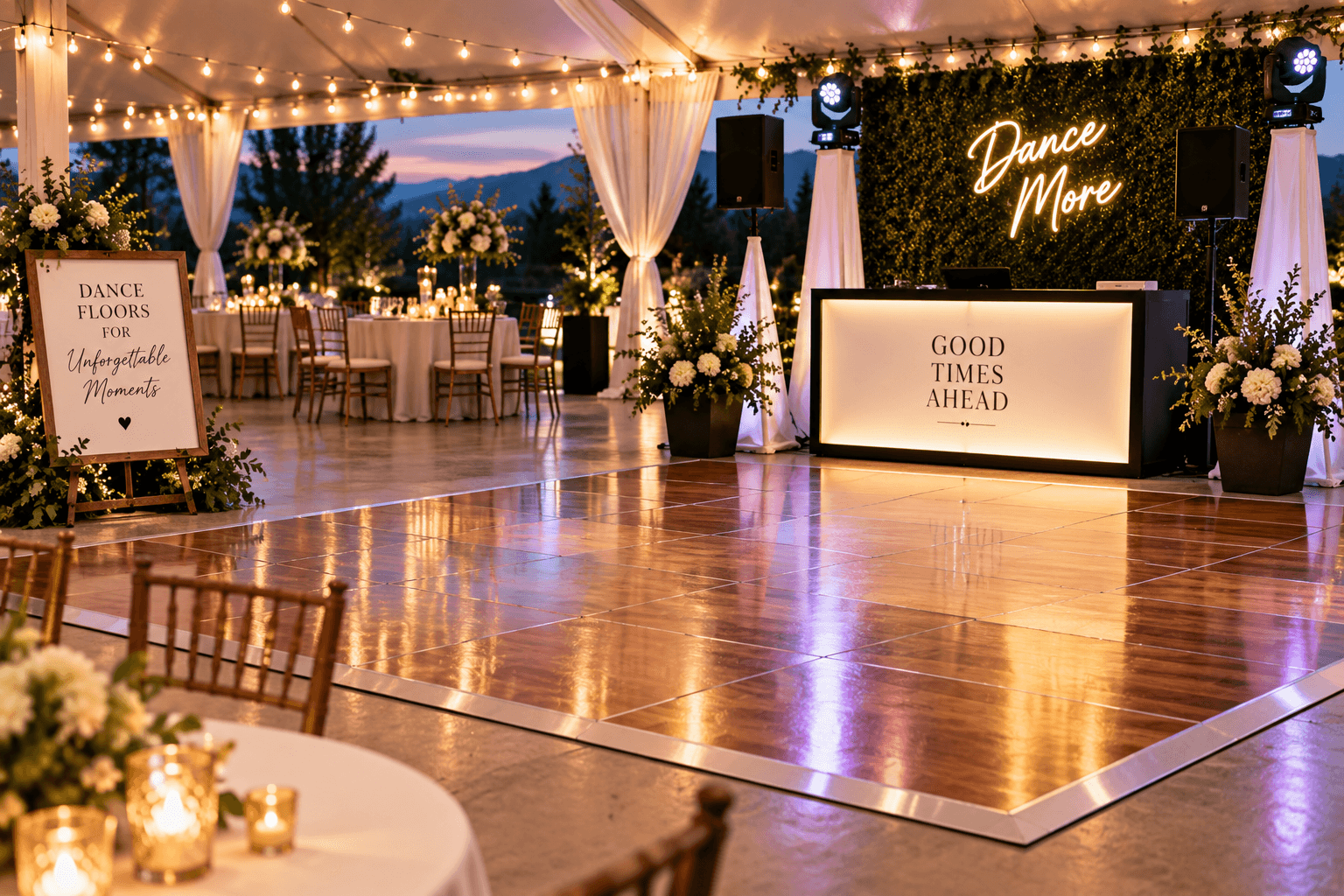
- Lighting for safety paths, the stage and the dance floor
- Power plan: house circuits, a generator or both
- Cable covers, rain protection and a weather shutdown plan
When a Stage Needs a Permit
Cities often list stages as a special event trigger even when the stage is small. Windsor includes stages on its Special Activities checklist. In Littleton, a stage at a public event needs the City Event Permit, and the Building Division reviews stages and electrical. Centennial's Centennial Center Park requires a City permit for stages. Colorado Springs routes stages and other equipment setups in City parks to a Special Event Permit.
Colorado's Division of Fire Prevention and Control publishes the 2021 International Fire Code with state amendments. Chapter 31 defines a temporary special event structure as any temporary ground-supported structure, platform, stage, stage scaffolding or rigging, canopy, or tower supporting audio or visual effects equipment not regulated under the International Building Code. Section 3105.2 requires approval and permits from the fire code official and the building official when that structure is larger than 400 square feet.
A 20-by-20 stage is exactly 400 square feet. Anything larger crosses the IFC threshold in jurisdictions that enforce that section. Construction documents for temporary special event structures are prepared by a registered design professional and follow the International Building Code and ANSI E1.21.
Ask the local fire district and building department which code edition they enforce and if your stage size needs a separate permit beyond the city's special event application.
Sound Rules: State Statute and Local Limits
Colorado Revised Statutes 25-12-103 sets statewide maximum permissible noise levels measured 25 feet or more from the property line:
- Residential (7 a.m.–7 p.m. / 7 p.m.–7 a.m.)
- 55 / 50 dB(A)
- Commercial (day / night)
- 60 / 55 dB(A)
- Light industrial (day / night)
- 70 / 65 dB(A)
- Daytime excess allowed
- Up to 10 dB(A) for 15 minutes per hour
Subsection (11) exempts cultural and entertainment events held by the state, local governments or nonprofits and their permittees, while preserving local authority to regulate. In practice, cities add their own triggers:
- Longmont: amplified sound audible more than 25 feet from the source, or over 80 decibels on the eProval form, needs a Use of Public Places permit; private property has no permit for excessive noise.
- Littleton: a Residential Amplified Sound Permit for any private party with a DJ or live band.
- Colorado Springs: a Noise Hardship Permit for any amplified sound in a City park, requested about 30 days ahead.
- Westminster: pavilions don't allow amplified music.
- Erie: amplified sound in parks needs the parks director's prior written consent.
- Rocky Mountain National Park wedding sites: no amplified music, and music otherwise limited to 60 dB.
Point speakers into the crowd, not toward homes, and set an end time before you book the DJ. For Estes Park receptions after a Rocky Mountain National Park ceremony, keep the sound plan at the reception venue, not at the park site.
Power, Generators and Outdoor Electrical
Stages and lighting packages often outgrow a venue's house circuits. The 2021 IFC's special event provisions require electrical equipment listed for outdoor use, and generators at least 10 feet from combustibles with a guard at least 3 feet away. Local districts can be stricter: Windsor Severance Fire Rescue keeps generators 20 feet from tents.
Ask the provider for a load list, how many circuits or how large a generator the package needs, who runs the cabling and who covers cable ramps so guests don't trip. Outdoor-rated distribution, GFCI protection and a dry place for the board matter as much as the speakers.
Placement and the Site Plan
Special event applications almost always ask for a site plan. Put the stage, speaker positions, cable runs, generator, tent and emergency lanes on it before you submit. Windsor's Special Activity Guidelines ask for the direction of each speaker and a 20-foot emergency access lane. Estes Park's Riverside Plaza policy wants tent permits, liquor, security and insurance documents 30 days before the event.
Leave pathways clear for guests, catering and emergency vehicles. Keep the stage away from overhead lines, and keep the generator where exhaust won't blow into the tent or the seating area.
Weather Monitoring and Lightning
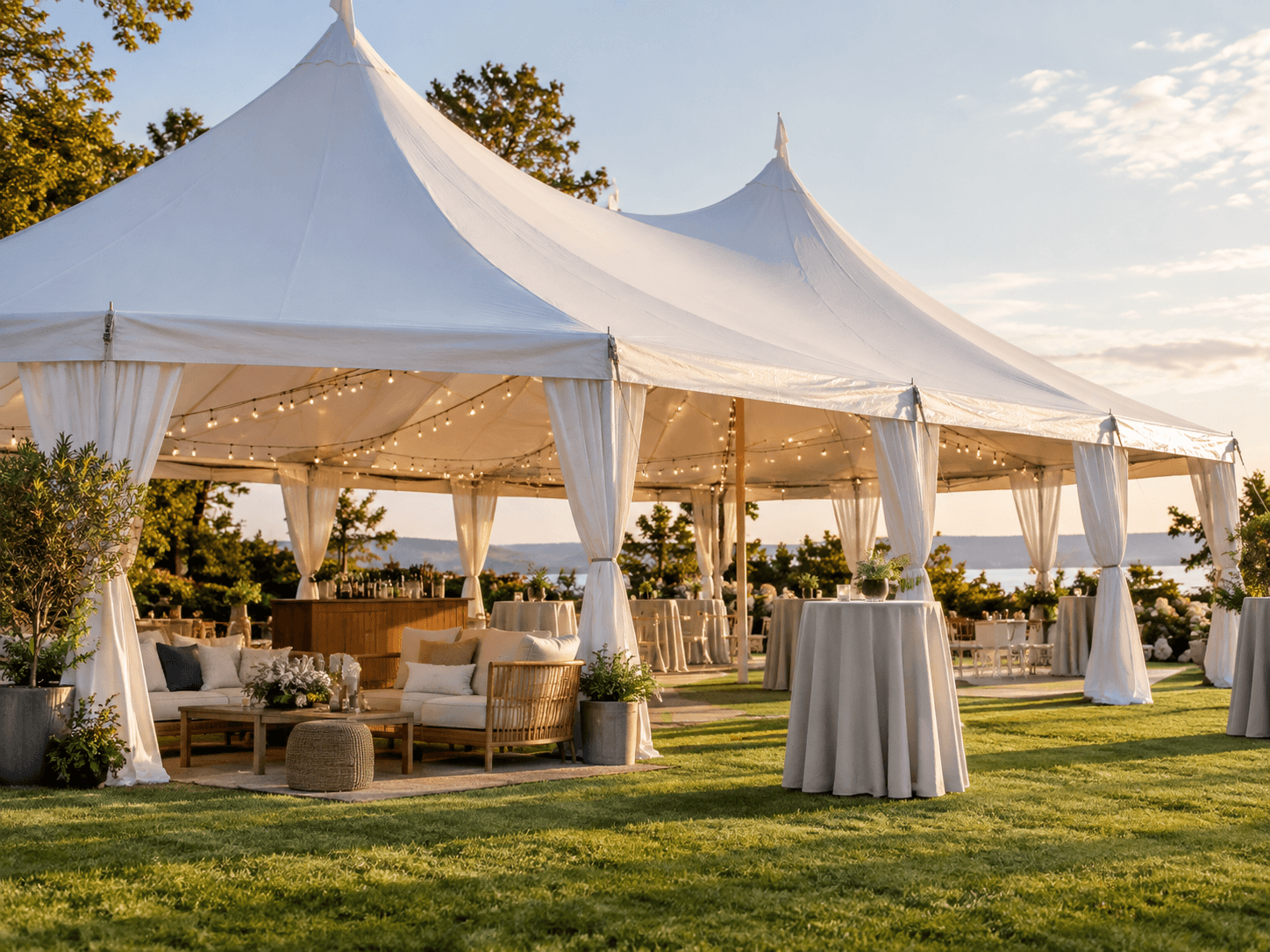
Temporary stages and outdoor sound systems don't mix with high wind or lightning. The 2021 IFC's special event weather section requires a weather monitoring person where the fire code official requires one, and the National Weather Service says there's no safe place outside when thunderstorms are in the area.
Ask who watches the forecast on the day, what wind speed triggers a shutdown and where guests go when lightning is nearby. A building or hard-topped vehicles within a short walk beats a tent for thunderstorm shelter. Mountain evenings add another layer: NOAA's Estes Park normals put July lows around 48°F, so lighting plans often pair with heaters and sidewalls at the reception.
Questions to Ask a Stage and AV Provider
- What stage size and height fit the site and the sight lines?
- Does the package cross 400 square feet, and who handles fire and building permits?
- What sound level will the system run at, and can it stay inside local limits?
- What power does the package need, and who supplies the generator?
- Who draws the site plan showing stage, speakers, generator and cable runs?
- What wind and lightning thresholds trigger a shutdown?
- What is the setup and teardown window, and who stays on site during the event?