Restrooms are easy to leave until last and hard to fix on the day. A park restroom may close before your event ends, a backyard has one bathroom for a crowd of guests, and a public event permit may ask exactly how many units you'll bring and where they'll stand.
This guide covers choosing between restroom trailers and portable units, estimating a count, planning accessible units and handwashing, and the placement, servicing and permit details Colorado cities ask about. Inventory, utility needs and pricing vary by provider, so confirm the specifics with the company you rent from.
First, Check What the Site Already Has
Start with the venue. Ask how many restrooms it has, whether they'll be open for your whole event and who stocks them. Park restrooms in particular come with limits. Westminster's pavilion restrooms close at 8 p.m., and the City supplies a port-a-let when a pavilion restroom is out of service. In Fountain, the City doesn't provide port-o-lets for park events, and potable water isn't available for park activities.
If the site's restrooms will cover only part of the crowd, or none of it, plan rentals for the gap.
Restroom Trailers vs. Portable Units
Portable Units
Single-user portable toilets are self-contained and quick to place, which makes them the default for park events, festivals and open land. They come in standard and accessible versions, and many events pair them with separate handwashing stations.
Restroom Trailers
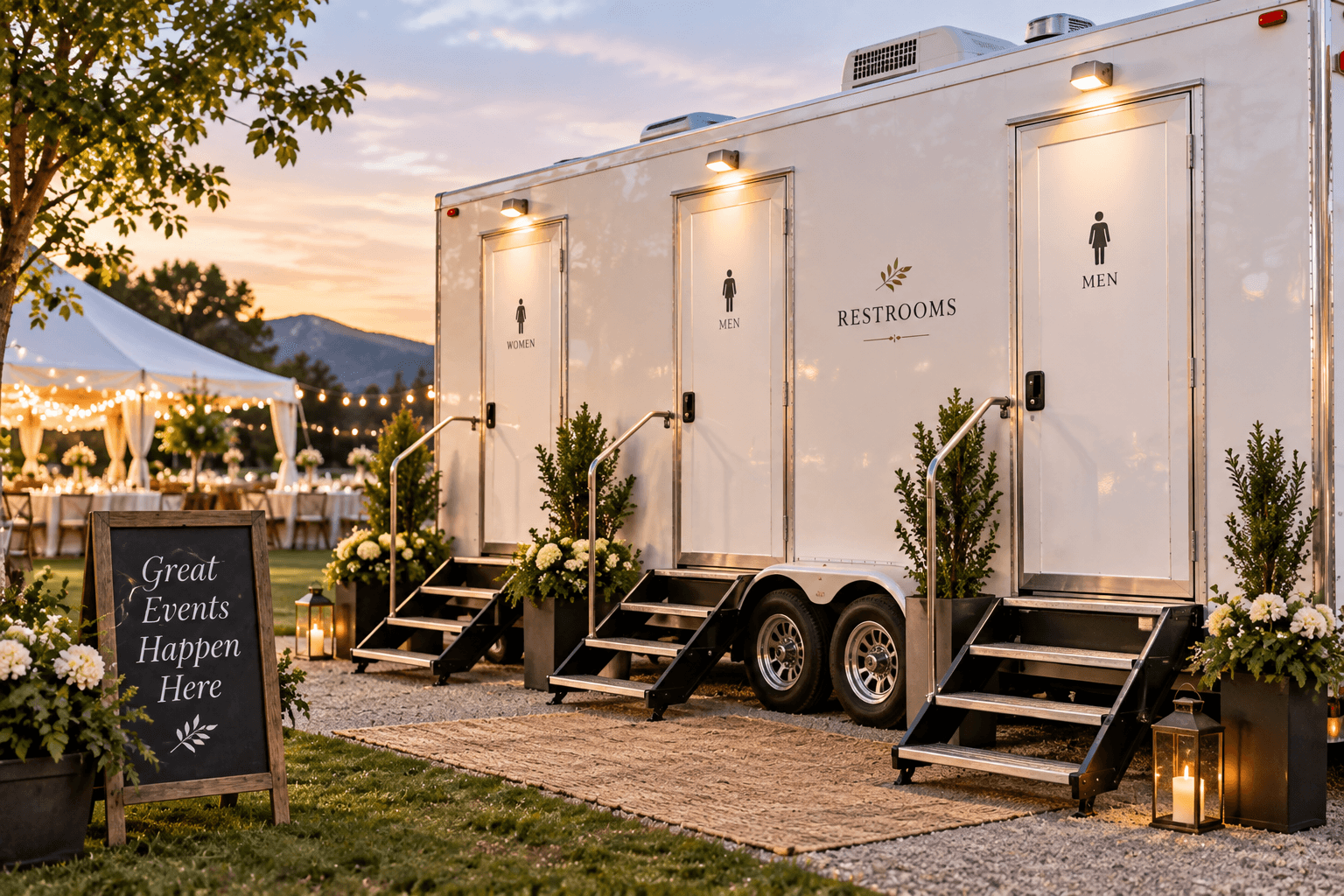
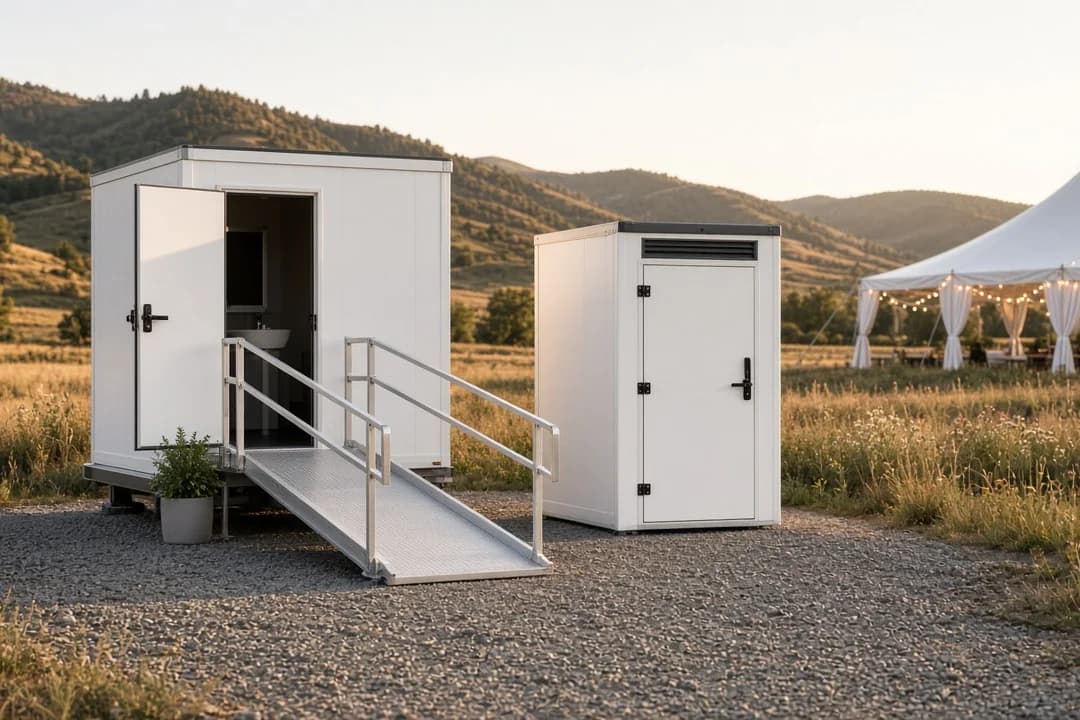
Restroom trailers put multiple stalls, sinks and lighting in a towed unit, and they're common at weddings and longer private events. They also bring site requirements: a level spot a truck can reach, often a power source and sometimes a water connection, depending on the model. Ask each provider what its trailer needs, how it's serviced, and whether its steps or ramp make it usable for every guest.
Mixing Both
On a spread-out site, a trailer near the reception plus a few portable units, including an accessible one, near parking or a far corner can cover more ground than either alone.
How Many Restrooms Does an Event Need?
There's no single statewide number for private events, and requirements vary by jurisdiction. One published Colorado benchmark comes from Mesa County Public Health. Its guide for special event coordinators says the number of toilets depends on attendance, with current guidance of 2 toilets for 100 people and an additional toilet for each additional 100 attendees, plus accessible handwashing stations.
- 100 attendees
- 2 toilets
- 200 attendees
- 3 toilets
- 500 attendees
- 6 toilets
- 1,000 attendees
- 11 toilets
The table applies Mesa County's guidance, which is written for public events in that county. Treat it as a starting point, not a rule for your town. Event length, alcohol service and a crowd that arrives all at once all affect the count, so ask your permit office and provider how they size orders.
Mesa County is home to Grand Junction. Elsewhere, ask the city or county that issues your event permit whether it publishes its own guidance.
Accessible Units Are Part of the Count
Under the 2010 ADA Standards, where single-user portable toilets are clustered at one location, 5 percent of the units in each cluster must be accessible, and because the standards round fractions up to the next whole unit, even a small cluster needs one. Accessible units are identified with the International Symbol of Accessibility. Woodland Park's event permit materials apply the same rule, and Westminster's special event site plan asks organizers to show restroom locations and whether they're accessible.
- Place accessible units on a firm, level surface along an accessible route, not on soft grass or a slope.
- Keep them close to the event, not at the far end of a parking lot.
- If you rent a trailer, ask whether it has an accessible stall, and add an accessible portable unit if it doesn't.
Handwashing and Supplies
Portable toilets don't always include a sink. Mesa County's guidance calls for accessible handwashing stations with the toilets, and Fountain's special event application asks how many regular, accessible and handwashing units you'll provide. Ask whether each unit includes a sink or sanitizer, how much water a freestanding station holds, and who restocks soap, paper towels and toilet paper during a long event. Where a park has no drinking water, freestanding stations need to bring their own.
Placement, Delivery and Servicing
Where the units stand affects guests, neighbors and the delivery truck, and several Colorado cities spell out what they expect:
- Parker requires portable toilets on pavement, such as a parking lot or walk, not on turf or in plant beds, and the Town can require additional restrooms for larger events.
- Littleton requires an event layout plan for permitted events that shows port-a-let locations along with tents, entries and exits.
- Westminster asks for a written description of how restrooms will be provided, including delivery and pickup times.
- Woodland Park requires a site plan showing toilets and handwashing for its special event Temporary Use Permit.
- Denver Parks and Recreation's event logistics guide asks that portable toilets be locked or zip-tied on arrival and again after the event, and notes that event insurance has to cover the whole time they're on site, such as a Saturday drop-off with a Monday pickup.
Ask the provider how close the truck needs to get, what surface it can drive on, whether servicing is included for multi-day events and when pickup happens. Units delivered the day before need to be secured overnight.
Colorado Weather and Restrooms
Colorado's range of conditions changes the questions. For cold nights in spring, fall or the mountains, ask whether a restroom trailer is heated and how the provider protects its water lines from freezing. For summer events in hot places like Pueblo, where NOAA's normal July high is 93.4°F, ask about ventilation, shade and servicing frequency, and set units where guests won't wait in full sun.
Questions to Ask a Restroom Rental Provider
- How many units do you recommend for our guest count, event length and alcohol service, and what's that based on?
- Which units are accessible, and how are they marked?
- Do units include handwashing, or do we add stations?
- What does a trailer need: power, water, level ground, access width?
- Can the truck reach our placement spot, and on what surface?
- When do you deliver and pick up, and who secures units overnight?
- Is servicing included during the event?
- Who restocks supplies?
- Can you provide a certificate of insurance if the venue asks?
Browse restroom trailer rentals to compare options, and see the Colorado wedding rental checklist and how many tables and chairs you need for the rest of the plan.