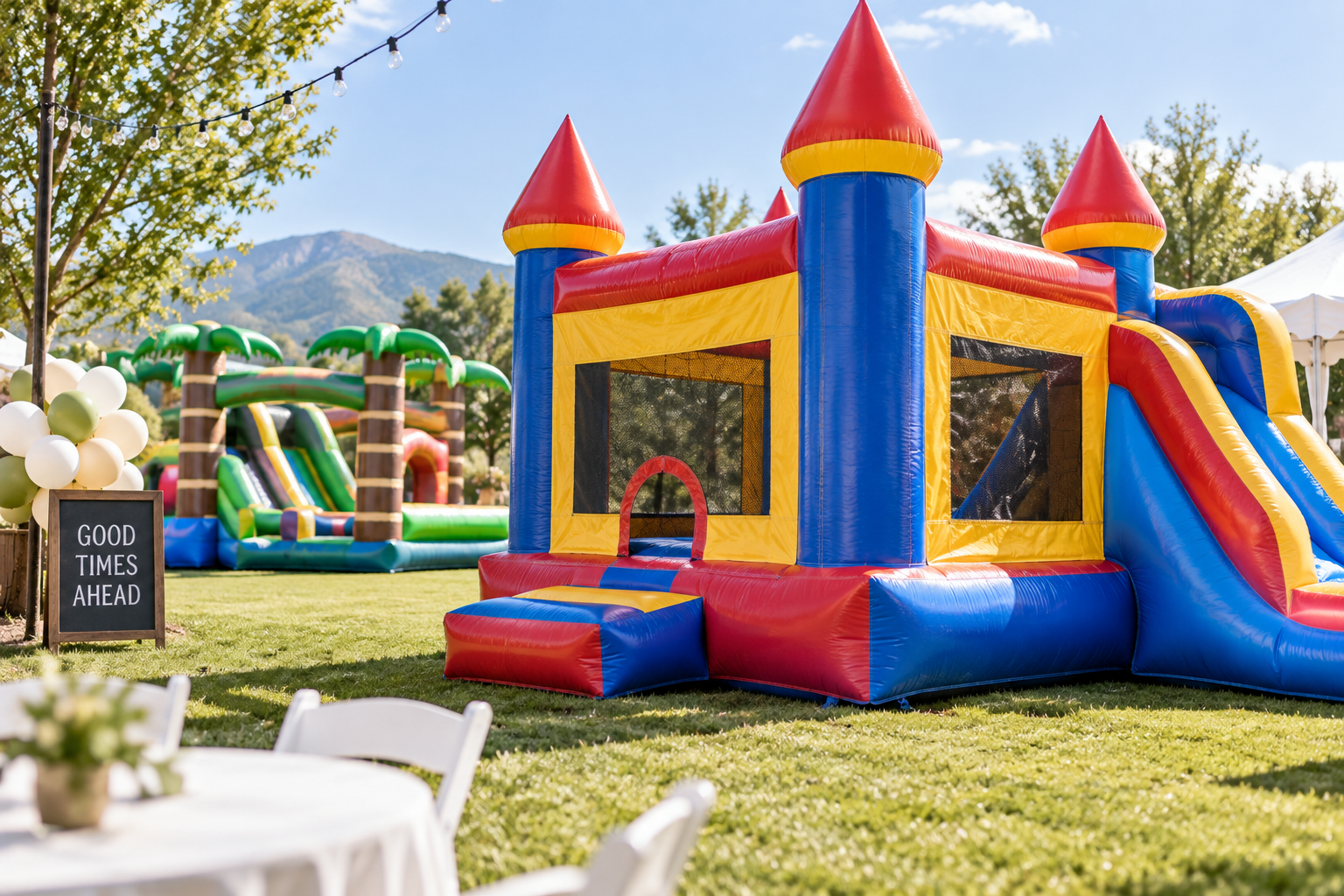
A bounce house looks simple until a city asks for a permit, a generator and a certificate of insurance, or until a stake hits an irrigation line. Colorado treats many inflatables as amusement rides when they're open to the public, and cities layer on park, fire and insurance rules of their own.
This guide covers the state registration rules that apply to public events, the city-by-city park triggers that show up most often, anchoring and Colorado 811, power and generators, insurance, weather and the party rentals that usually travel with a bounce house. Inventory, delivery areas and pricing vary by provider, so confirm the specifics with the company you rent from.
Colorado's Amusement Ride Rules for Inflatables
The Colorado Division of Oil and Public Safety, part of the Colorado Department of Labor and Employment, regulates amusement rides. Its rules define an inflatable amusement ride as a bounce, climb, slide or interactive play structure made of flexible fabric and kept upright by continuous airflow from blowers.
Before opening a ride to the public, an operator has to register with the Division and get a permit. Registration lasts 12 months, each device needs an annual third-party inspection certificate, and the application asks for insurance carrier details. The Division publishes a list of registered operators, so for a public event you can ask whether the company you're booking is on it.
Private backyard parties aren't the same as opening a ride to the public. Still ask the provider about inspection and insurance, and check the city rules below, which apply whether the event is public or private.
Check the Site: City Rules That Come Up Often
Park and special event rules vary by city. These are the patterns that show up most often on Colorado Front Range sites:
- Longmont: bounce houses in parks need a Special Event on Public Property permit, sandbags or stakes no longer than 6 inches, a generator and a $1 million certificate of insurance naming the City; water inflatables aren't allowed.
- Windsor: blow-up structures are on the Special Activities Permit trigger list, and ground stakes 12 inches or longer need line locates.
- Thornton: the City Code prohibits bouncy houses and similar inflatables in City parks without a permit from the director.
- Centennial: Centennial Center Park requires a City permit for inflatables.
- Parker: a General Event permit when inflatables exceed 400 square feet.
- Colorado Springs: bounce houses in City parks go through a Special Event Permit.
- Westminster: inflatables, including jump castles, aren't allowed in City parks.
- Berthoud: Pioneer Park lists a bounce house install section among its pavilion features; tent and canopy rules from Berthoud Fire still apply to the rest of the setup.
When the event is on private property, ask the city about temporary use or special event permits, and ask the fire district about tents and generators that travel with the party.
Anchoring, Stakes and Colorado 811
Inflatables stay up with stakes, sandbags or water barrels. Cities often set the stake length: Longmont's park rule is 6 inches or shorter without a locate, and South Suburban Parks and Recreation asks for a call to its permit office a week ahead for utility locates when tents or inflatables will be staked. Windsor requires line locates for stakes 12 inches or longer.
Colorado 811 is the statewide call-before-you-dig service. State law requires contacting Colorado 811 at least three business days before digging, and you wait at least three full business days after the request. Ask the provider who places the locate call, and don't assume a short stake is always enough: on soft ground or a windy plains site, ballast may be the better answer.
Berthoud Fire Protection District publishes minimum leg weights for canopies and tents: 40 pounds per leg for a 10-by-10, 80 pounds per leg for a 10-by-20 and 500 pounds per leg for a six-leg 40-by-20. Ask your bounce house provider for the weight or stake plan for the specific unit.
Power and Generators
Most bounce houses need continuous blower power. Longmont's park rules require a generator rather than plugging into a shelter outlet. Ask what wattage the unit needs, whether the provider brings a quiet generator, where it will sit and how fuel is stored.
When a tent is part of the same party, fire districts often set generator clearances. Windsor Severance Fire Rescue, for example, keeps generators at least 20 feet from tents. Confirm the distance with the district that covers your address.
Insurance Cities Ask For
A $1 million certificate of insurance naming the park owner is a common requirement for inflatables in Colorado parks. Longmont asks for a $1 million combined single limit naming the City as additional insured, and South Suburban Parks asks for a $1 million certificate from the rental company naming the District. Some cities also ask that the certificate specifically cover the bounce house, and Longmont notes that some vendors supply that coverage themselves.
Ask the rental company for a certificate early, confirm the named insured matches the city's or district's wording, and keep a copy with the permit packet.
Weather and When to Take It Down
Wind and lightning end an inflatable event faster than rain. Ask the provider for its wind-speed shutdown number and how it monitors weather on the day. The National Weather Service says there's no safe place outside when thunderstorms are in the area, so plan a building or hard-topped vehicles guests can reach.
Heat matters on the Front Range plains. NOAA's 1991–2020 normals put Longmont's average July high at 90.8°F and Pueblo's at 93.4°F. Schedule shade, water and rest breaks, and ask whether the unit's fabric gets hot in direct sun.
Party Rentals That Usually Travel With a Bounce House
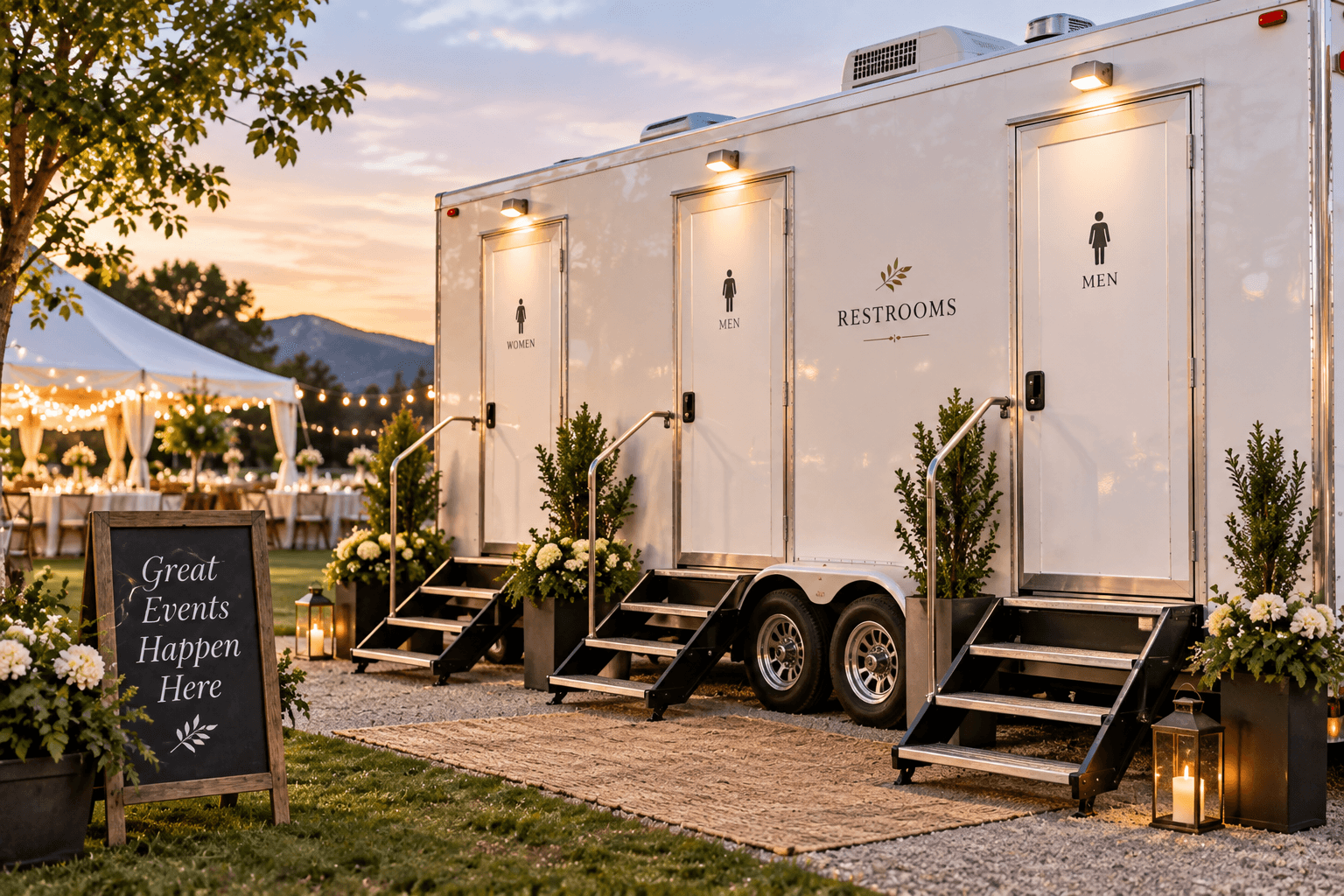
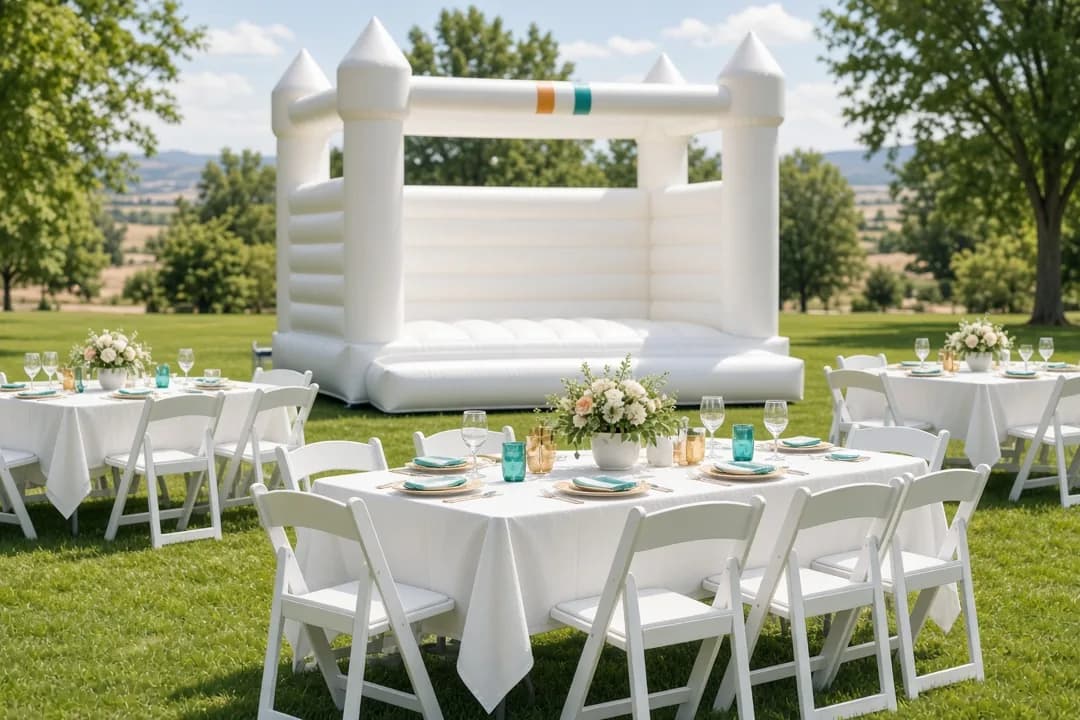
Most kids' parties and backyard celebrations rent more than the inflatable. Use how many tables and chairs you need for seating around the bounce house, and the event restroom rental guide when park restrooms won't cover the crowd.
If a canopy or tent is part of the order, check cooking and heating rules. Berthoud Fire and Windsor Severance Fire Rescue both prohibit cooking under tents, and Windsor keeps grease-producing cooking 20 feet away. Put the grill and food truck outside the tent footprint on the site plan.
Questions to Ask a Bounce House Provider
- Is the company registered with the Colorado Division of Oil and Public Safety for public events?
- What is the unit's footprint, height and blower power need?
- How is it anchored, and who calls Colorado 811 if stakes go in?
- Does the company bring a generator, and where will it sit?
- Can it issue a certificate of insurance naming the city or park district?
- What wind speed triggers a shutdown, and who monitors weather?
- What is the setup and teardown window, and what happens if the park closes early?